

Call today! 813.949.3300

Proudly Serving Lutz · Carrollwood · Northdale · Cheval · Odessa · Land O’ Lakes
Hyperhidrosis · Lutz, Florida

Botox® for Excessive Sweating
Hyperhidrosis Treatment

If you keep a spare shirt in the car, you have probably been told for years that you just run warm. Excessive sweating is a diagnosable medical condition, and for the underarms the treatment is FDA-approved and frequently covered by insurance.
ANCC Board-certified NP
20+ Years of experience
4.7★ 67 Google reviews
On This Page

How Excessive Sweating Is Treated in Lutz, FL

Botox® for excessive sweating in Lutz, FL treats primary focal hyperhidrosis, a medical condition in which the sweat glands are overactive for no underlying reason. Small injections placed just under the skin block the nerve signal that switches those glands on: Most often in the underarms, and also the palms, soles and scalp. Susan Wallace, MSN, ANP-BC, a board-certified Adult Nurse Practitioner and Diamond-status Master Injector, assesses and treats it at Nu Image Medspa, 3939 Cheval Blvd, off N Dale Mabry Hwy near Cheval, Steinbrenner High and Gaither High.

For the underarms this is an FDA-approved use, not a cosmetic one, and it is often covered by insurance once a prescription antiperspirant has been tried without success. The standard dose is 50 units per underarm, 100 units in total. Sweating usually drops within 4–7 days and results last 4–6 months, noticeably longer than cosmetic Botox®. Self-pay runs about $1,000–$1,400 for both underarms. There is no downtime. Serving Lutz, Cheval, Carrollwood, Northdale, Odessa and Land O’ Lakes. Open Mon 9–5, Tue–Fri 9–7 and Sat 9–3. Call 813.949.3300.

Where the Line Is

When Sweating Stops Being Normal

Sweating is not a problem until it stops matching the situation. The clinical picture for primary focal hyperhidrosis is fairly specific, and most people recognise themselves in it immediately: Sweating that is out of proportion to the heat and to what you are doing, that appears on both sides equally, that started in your teens or early twenties, that happens at least once a week, and that interferes with something you need to do.
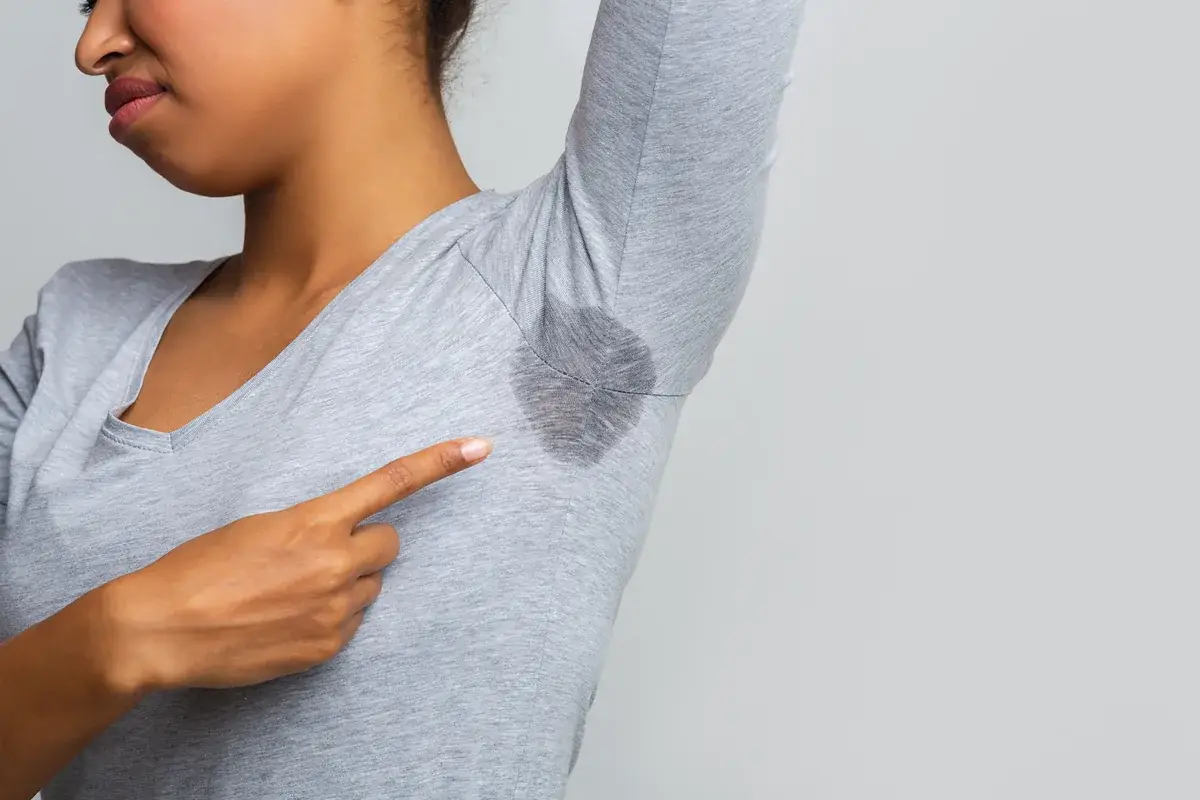
Woman pointing at an underarm sweat mark on her shirt

One more detail matters, and it is the one that separates this from everything else: It stops when you sleep. Primary hyperhidrosis is a daytime condition. Sweating that soaks the bed at night is a different problem and points somewhere else.

What it actually costs people

The list is always the same. Two shirts a day. A wardrobe narrowed to black, white and prints, because anything else shows. Paper that wrinkles under your hand. A phone that will not register a fingerprint. Steering wheels, door handles and handshakes, all planned around. Photographs taken with your arms down.

None of that shows up on a lab test, which is part of why people put off asking about it. It is also why the condition is measured by how much it disrupts your day rather than by volume of sweat.

The part worth ruling out

Most excessive sweating is primary, meaning there is no disease behind it. Some is secondary, meaning something else is driving it: A thyroid condition, blood sugar problems, an infection, a medication you are taking, hormonal changes, and occasionally something that needs prompt attention. Secondary hyperhidrosis usually behaves differently. It tends to be generalised rather than confined to one or two areas, it often begins later in life, and it frequently continues overnight.

Sorting one from the other is a clinical assessment, and it happens before anything is injected.

Why It Goes Untreated Here

Eight Months With Nowhere to Hide

Most of the country gets a cover season. Five months of jackets, layers and cool rooms, when the condition is invisible and more or less manageable, and when nobody is looking closely. Lutz gets about four weeks of that, in January, if the year cooperates.
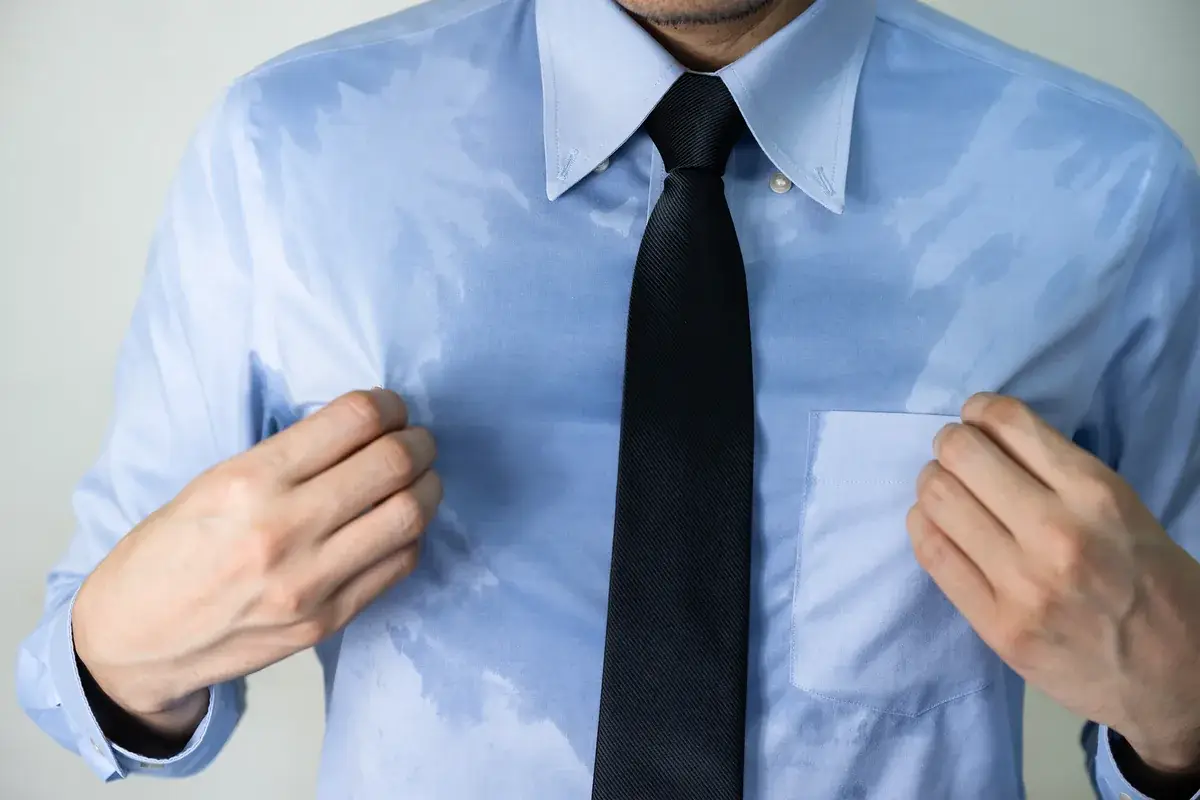
Man in a shirt and tie with sweat showing through on a hot day

So the coping runs year round and turns into routine you stop noticing: The spare shirt behind the driver’s seat, the pause in the parking lot to cool down before walking in, the seat you pick in a restaurant, the deliberate choice of a patterned top, the handshake dried on a trouser leg first. Getting from the car to the door at Cheval Athletic Club, or into a client meeting off Dale Mabry, means arriving already managing it.

Why it gets dismissed here

And this is the part that keeps people from asking. Everyone around you is warm too. Sweating through a shirt in Wesley Chapel in August does not look like a symptom, it looks like Tuesday. In Ohio the same shirt in February would prompt a question.

The result is that the climate makes the symptom worse and simultaneously makes it easier to explain away. People spend a decade assuming they simply run hot, never learning there is a name for it, a diagnosis for it and a treatment for it. That is the single most common thing we hear in this consultation: I did not know this was a thing you could treat.

What that means for timing

Results last 4–6 months, so two treatments a year covers most people. If you want to be comfortable through the worst of it, the useful pattern is to treat in April or May, before the humidity settles in, rather than in August when you are already struggling. Plenty of people also treat ahead of a specific date: a wedding, a conference, a graduation at Steinbrenner High or Gaither High, a season of showings if you sell real estate.

The Treatment

How It Works, and the Real Dose

Sweat glands do not decide anything on their own. They fire when a nerve tells them to, using a chemical messenger called acetylcholine. Botox® blocks the release of that messenger, so the signal never arrives and the gland stays quiet. It is the same mechanism used on a facial muscle, applied to a different target.
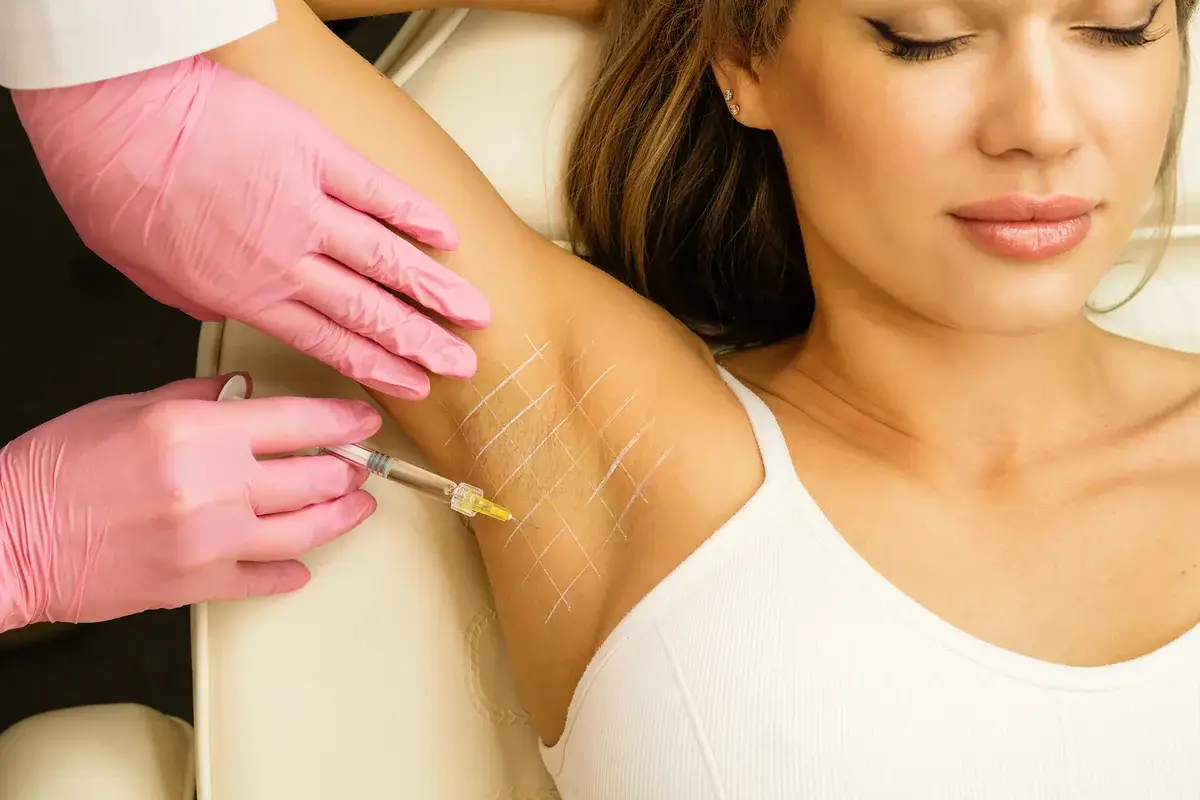
Underarm mapped in a grid before Botox treatment for excessive sweating

The FDA-approved dose for severe primary axillary hyperhidrosis is 50 units per underarm, 100 units in total, placed in a grid roughly one to two centimetres apart, just beneath the skin rather than into muscle. That number comes from the trials that produced the approval, so it is a published figure rather than an estimate.

Mapping the area first

Sweating is rarely spread evenly across an underarm. A starch-iodine test, sometimes called the Minor’s test, makes the active area visible: Iodine goes on, starch goes over it, and where sweat appears the two react and turn dark. Treating the map rather than the whole hollow puts the units where they are doing something.

Onset, duration and what to expect

Sweating typically drops within 4–7 days and reaches its full effect at about two weeks. It lasts 4–6 months, longer than cosmetic Botox®, because a sweat gland is a simpler target than a working muscle. The appointment takes about 20 minutes with numbing beforehand, and there is no downtime. Do not expect to stop sweating altogether, and you should not want to: The goal is bringing an overactive area back to normal, and the rest of your body continues to regulate temperature exactly as it did.

Your Options

Where Botox® Fits

Prescription antiperspirant comes first, and for some people it is enough. Botox® is the usual next step when it is not, and it is the one with FDA approval behind it for the underarms. A device such as miraDry offers a longer-lasting option with a bigger commitment.

Botox®Rx antiperspirant
HowBlocks the nerve signalPlugs the duct
Lasts4–6 monthsDays, reapplied
UnderarmsFDA-approvedFirst-line
IrritationUncommonCommon
InsuranceOften, after topicalsUsually covered
Try firstTopicals, since insurers require a documented trial
The Question Everyone Asks Second

Will Insurance Cover It?

For the underarms, often yes. Because Botox® holds FDA approval for severe primary axillary hyperhidrosis, most plans treat it as a medical claim rather than a cosmetic one, and many cover it once first-line treatment has been tried and has not worked.

What a plan usually wants to see

The requirements are consistent across most insurers: a documented diagnosis of primary focal hyperhidrosis, evidence that a prescription-strength topical antiperspirant such as aluminium chloride was used properly and did not control it, and a note on how the condition affects daily activity or work. That package goes in as a prior authorisation and comes back with a decision before anything is scheduled.

The topical step is worth understanding rather than resenting. It genuinely works for a share of people, it is inexpensive, and even when it does not work it is the documentation that opens the door to coverage. Skipping it usually means paying out of pocket.

Where it is self-pay

Palms, soles, face and scalp are treated off-label, meaning outside the specific use the FDA approved. That is a routine and entirely lawful part of medical practice, and these are well-established uses with long clinical track records. It does mean insurers rarely cover them, so those areas are almost always self-pay. Underarm treatment without insurance runs about $1,000–$1,400 for both sides, and payment plans are available.

We will tell you at the assessment which route your situation fits, and we would rather you used your benefits than paid us directly.

Other Areas

Beyond the Underarms

The underarms are the most treated area and the only one with FDA approval, but they are not the only place hyperhidrosis shows up, and for some people they are not the worst.
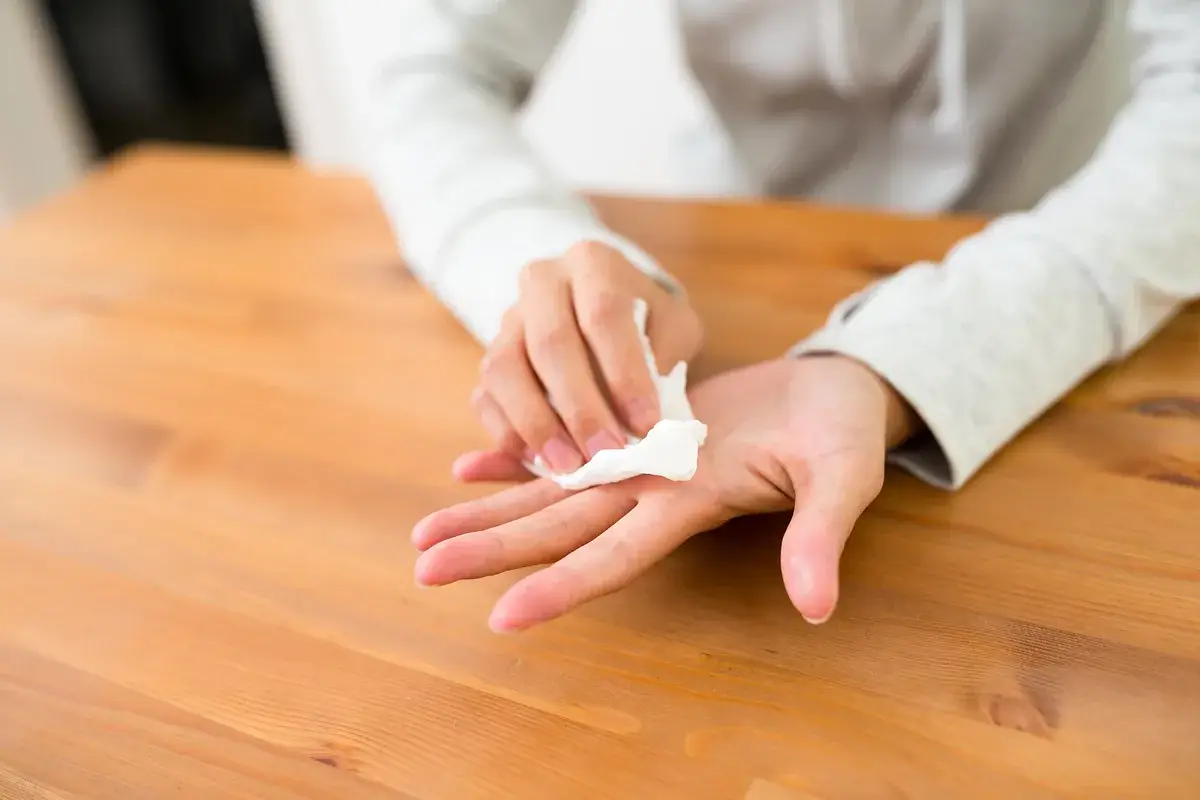
Damp palm being dabbed with a tissue

Palms

Sweaty hands affect work and greeting people more than anything else on this list. Treatment works well, and two things are worth knowing before you book it. The palms are considerably more sensitive than the underarms, so numbing and technique matter a great deal. And because the injections sit near the small muscles that control fine grip, some people notice mild, temporary weakness in the hand for a few weeks. It resolves fully. Results here also tend to run shorter, closer to 3–4 months.

Soles

Less commonly requested and similar in character to the palms: effective, uncomfortable, and shorter-lasting than underarm treatment.

Scalp, forehead and face

Sweating that runs down the face defeats makeup, sunscreen and glasses, and it is the version most likely to be mistaken for simply being hot. It responds well. Placement is careful work, because the injections sit near muscles that create expression, and too heavy a hand in the wrong plane can affect the brow. This is an area where an experienced injector matters more than the price.

At a Glance

Hyperhidrosis Treatment at a Glance

Treats Primary focal hyperhidrosis of the underarms, palms, soles, scalp and face
How it works Blocks the nerve signal that switches the sweat glands on
FDA status Approved for severe primary axillary (underarm) hyperhidrosis. Other areas are off-label
Standard dose 50 units per underarm, 100 units total
Insurance Often covered for underarms after a documented topical trial. Other areas usually self-pay
Self-pay cost About $1,000–$1,400 for both underarms · see monthly specials
Results appear 4–7 days · full effect at about 2 weeks
Results last 4–6 months, longer than cosmetic Botox®
Downtime None · about a 20 minute appointment
Assessed by Susan Wallace, MSN, ANP-BC · board-certified Adult Nurse Practitioner

Pricing is approximate and confirmed at your assessment. Coverage depends on your plan and is verified before treatment is scheduled. Ask about flexible payment plans.

Where We Treat

Areas We Treat for Sweating

Every plan starts with an assessment of where the sweating actually is and what it is costing you:

Underarms

The most treated area and the only one with FDA approval. Mapped with a starch-iodine test, then treated in a grid across the active zone.

50 units per side

Palms

The area that interferes most with work and greeting people. More sensitive to treat, and mild temporary grip weakness is possible.

Off-label · 3–4 months

Soles

Less often requested, similar in character to the palms. Effective, uncomfortable during treatment, shorter-lasting.

Off-label · self-pay

Scalp and hairline

For sweating that runs into the face and defeats makeup and sunscreen. Responds well, and placement takes care near the brow.

Off-label · self-pay

Forehead and face

Careful work, because the injections sit near the muscles that create expression. Experience counts for more than price here.

Cosmetic in the same visit

Many people combine a hyperhidrosis appointment with cosmetic treatment. The units are billed separately and the areas do not interact.

Not sure whether what you have counts as hyperhidrosis, or whether your plan would cover it? The assessment answers both before anything is scheduled.

Why This One Needs a Clinician

A Diagnosis First, an Injection Second

Every other treatment on this site is cosmetic. You decide you want it, and the question is who places it well. This one is different, because excessive sweating is a symptom before it is a complaint, and the first job is working out what is producing it.

Primary focal hyperhidrosis has no disease behind it. Secondary hyperhidrosis does, and the list of possible causes includes thyroid disease, blood sugar problems, infection, medication side effects and hormonal change. It usually looks different: More generalised, later to start, often continuing overnight. Recognising the difference, and knowing when someone should be seen by their physician before anything is injected, is a clinical judgment rather than an aesthetic one.

Susan is a board-certified Adult Nurse Practitioner holding a Florida NP licence and ANCC certification, with a clinical background that includes internal medicine, pulmonary and gastroenterology at the National Institutes of Health before she moved into aesthetics in 2004. That is also what allows this practice to document a failed topical trial properly when your plan needs it.

✓ ANCC Board-Certified NP
◆ Diamond-Status Master Injector
20+ Years in Practice
4.7★ 67 Reviews
What to Expect

Your Visit, Step by Step

1
Assessment

We establish whether this is primary hyperhidrosis, review what you have already tried, and talk through coverage.

2
Mapping

A starch-iodine test shows exactly where the active area is, so the units go where they are needed.

3
Treatment

Numbing first, then a grid of small injections just under the skin. About 20 minutes, no downtime.

4
Results

Sweating drops in 4–7 days and settles by two weeks. Most people return every 4–6 months.

Getting Here

Minutes from Across North Tampa

We’re centrally located on Cheval Blvd, an easy drive from across the area. Tap your neighborhood for directions and local details.

Drive times are approximate. Check live directions for your exact route. Free on-site parking at 3939 Cheval Blvd, Lutz, FL 33558.

What our clients say

This was my first visit and it was a fantastic experience. Jenny is knowledgeable, friendly and meticulous in everything she does. I LOVE my new lips — thank you for making me look and feel more beautiful!

— C. Seyss

I’ve been going to Susan for 8 years and she and her staff are the best. She’s patient and takes her time to make perfection — I call her “Picasso.” Great prices, too.

— R. Dalom

Simply the best! I’ve been coming to this salon since 2007. From haircuts and facials to Botox, it’s nothing but the best experience and value. I always leave looking and feeling amazing.

— B. Gibson

Excessive Sweating Treatment – FAQ

Self-pay for both underarms runs about $1,000–$1,400, reflecting the 100 units the FDA-approved dose calls for. Many people pay considerably less or nothing, because underarm treatment is often covered by insurance once a prescription antiperspirant has been tried without success. We check your coverage before scheduling. Payment plans are available, and we run new specials every month.

Often, for the underarms. Because this is an FDA-approved use, most plans treat it as a medical claim. Insurers typically want a documented diagnosis of primary focal hyperhidrosis, evidence that a prescription-strength topical antiperspirant was used correctly and did not control it, and a note on how the sweating affects your daily activity. That goes in as a prior authorisation, and you get a decision before treatment is scheduled. Palms, soles and scalp are off-label and are usually self-pay.

The FDA-approved dose is 50 units per underarm, 100 units in total, placed in a grid roughly one to two centimetres apart just beneath the skin. That figure comes from the clinical trials behind the approval. It is considerably more than a cosmetic treatment uses, which is why the self-pay price is higher than a forehead appointment.

Typically 4–6 months, which is longer than cosmetic Botox®. A sweat gland is a simpler target than a working muscle, so the effect holds for longer. Most people settle into two treatments a year. Palms tend to run a little shorter, closer to 3–4 months.

Sweating usually drops within 4–7 days, with the full effect at about two weeks. If you are treating ahead of a specific event, allow two weeks so you can see the result and adjust if needed.

The underarms are straightforward. The skin is numbed first and the injections are shallow, so most people describe small pinches over about 20 minutes. Palms and soles are noticeably more sensitive and take more numbing and more care, which is worth knowing before booking those areas.

Treating one area does not force sweat elsewhere. Some people notice slightly more sweating in untreated areas, generally mild, because the treated area is no longer doing more than its share. Your body continues to regulate temperature normally, since only a small proportion of your sweat glands are involved.

Yes, and it works well, though there are differences worth knowing. Both are off-label, meaning outside the specific use the FDA approved, which is a routine and lawful part of medical practice but does mean insurers rarely cover them. Both are more uncomfortable to treat than the underarms. Palm treatment can cause mild, temporary weakness in fine grip for a few weeks because of where the injections sit, and results there tend to last 3–4 months.

Botox® has been used for hyperhidrosis for more than two decades and repeat treatment is well established. Side effects are usually limited to temporary tenderness or bruising at the injection sites. Because this is a medical treatment rather than a cosmetic one, your history and any medications are reviewed at each visit, and treatment is not appropriate for everyone. Susan will tell you if it is not right for you.

We’re at 3939 Cheval Blvd, Lutz, FL 33558, just off N Dale Mabry Hwy near Cheval, Steinbrenner High School and Gaither High School, serving Lutz, Carrollwood, Northdale, Cheval, Odessa and Land O’ Lakes. Open Mon 9–5, Tue–Fri 9–7 and Sat 9–3, with free on-site parking. Call 813.949.3300 to book.