

Call today! 813.949.3300
The flanks are the area either side of the waist, above the hip, and the fat that settles there is famously indifferent to dieting. CoolSculpting® for love handles in Lutz, FL chills that pocket to a temperature fat cells do not survive, and the body disposes of them over the weeks that follow. Our certified team carries out the treatment under on-site medical supervision at Nu Image Medspa, 3939 Cheval Blvd, off N Dale Mabry Hwy near Cheval, Steinbrenner High and Gaither High.
Flanks are treated as a pair, so plan on 2 cycles per visit at minimum, one per side, and frequently 4 across two visits about eight weeks apart. Expect roughly $1,400–$2,800 per session depending on how many cycles are used. Each cycle runs about 35 minutes and there is no downtime. Give it 8–12 weeks before judging the outcome, and expect it to sharpen further out to about sixteen. Two conditions decide whether it works at all: The fat has to be pinchable, and your weight has to be stable. Serving Lutz, Cheval, Carrollwood, Northdale, Odessa and Land O’ Lakes. Open Mon 9–5, Tue–Fri 9–7 and Sat 9–3. Call 813.949.3300.
Love handles, muffin top, side fat, flanks. Four names for a deposit of subcutaneous fat sitting over the oblique muscles, either side of the waist and just above the hip bone. Subcutaneous means it sits between the skin and the muscle wall, which is the part that matters, because that is the only kind this treatment can reach.
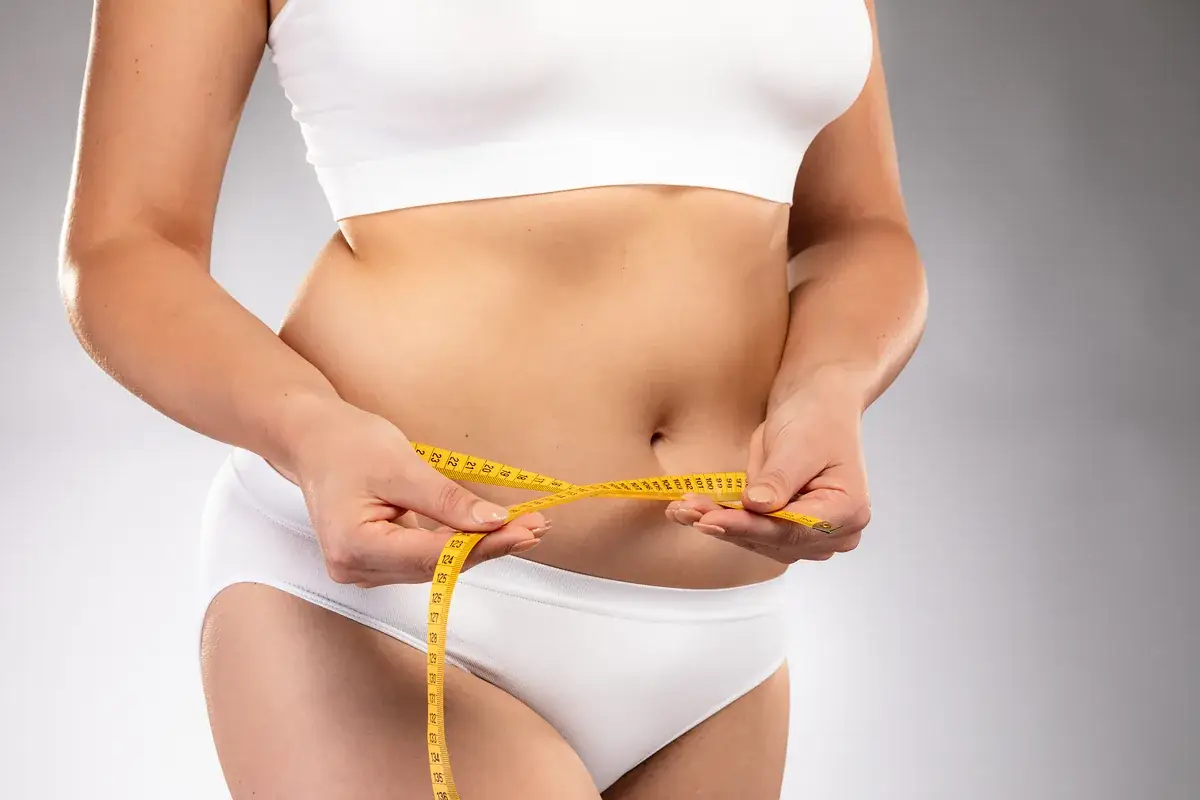
The other kind is visceral fat, which sits deeper, packed around the organs behind the abdominal wall. It responds well to diet and exercise, it carries genuine health consequences, and no external device can touch it. If you press into your side and the softness moves under your fingers, that is subcutaneous. If your waist is firm and round rather than pinchable, the volume is deeper and this is not your treatment.
Where your body stores fat is largely inherited, and the flanks are one of the most common places for that inheritance to show. The number of fat cells in an area is essentially fixed by adulthood. Losing weight shrinks them, it does not remove them, and the areas your genetics favour shrink last and least.
Which produces the situation almost everyone in this consultation describes. The weight came off. The face changed, the arms changed, the clothes changed. The sides did not. That is not a failure of effort, it is the distribution you were born with, and it is exactly the problem a targeted fat-reduction treatment exists to solve.
Side bends, Russian twists, oblique crunches, the weighted side plank. More people search for these than for any treatment, so they deserve a direct answer.

Every one of them trains the obliques. The obliques sit beneath the fat, and a working muscle does not draw on the fat lying on top of it. Your body pulls energy from fat stores as a whole, not from whichever patch happens to be nearest the effort. That principle has a name, spot reduction, and decades of research have failed to find any evidence for it.
There is a real and slightly cruel wrinkle. Building the obliques underneath a fat layer can make the waist measure slightly wider, because you have added muscle without removing anything. People often read that as the exercise failing when it is doing exactly what exercise does.
Overall fat loss works, and it should come first. Reducing total body fat reduces the flanks along with everywhere else. The problem is the order: The flanks go last, and for many people the point at which the sides finally shift is well below the weight they can realistically hold. That gap between what would work and what is sustainable is the reason this treatment exists.
Posture and clothing are worth a mention too. A waistband cutting across the deposit creates a fold that is partly fabric, so the same body in a different cut can look noticeably different. It changes the appearance, not the fat.
The single most common version of this consultation, and it has become far more common in the last two years, is somebody who has already done the difficult part.
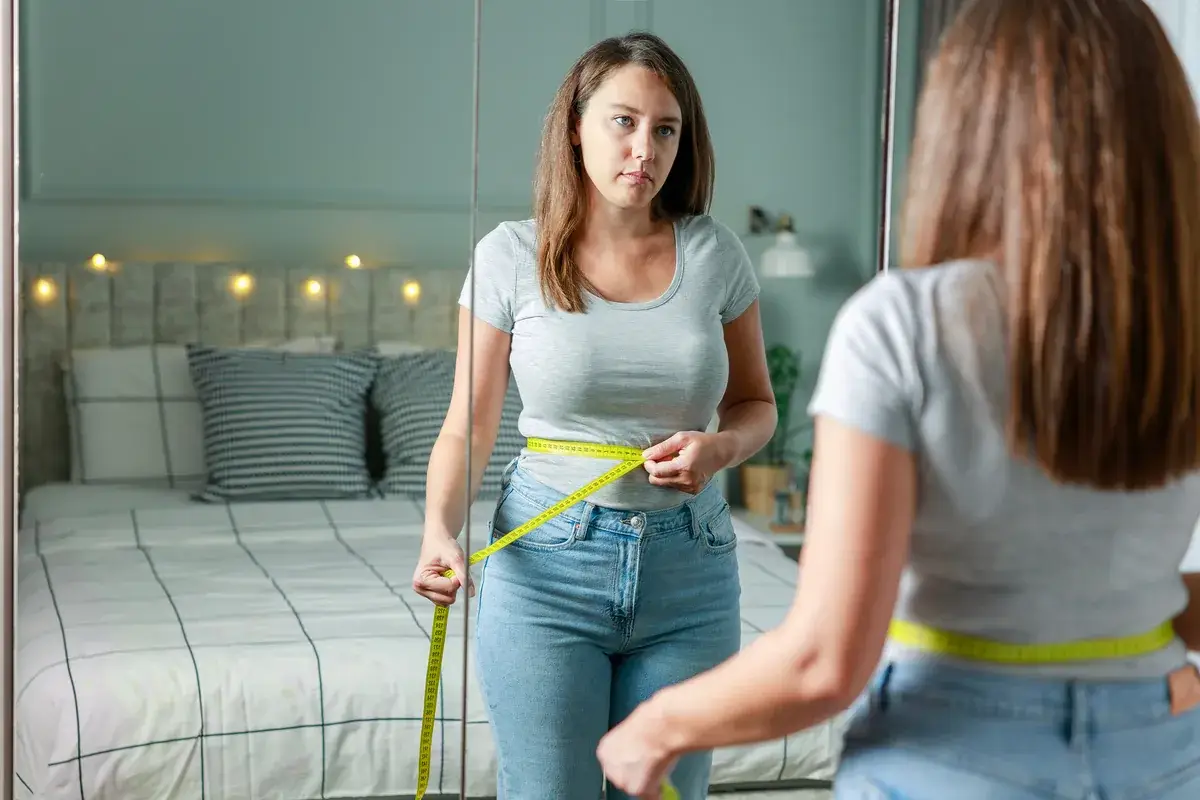
A great many people across Tampa Bay have reached a genuinely new weight recently, one they had not held before and are now holding steadily. Whatever route someone took to get there, the pattern afterwards is remarkably consistent: The face changes early, the limbs follow, and the flanks stay. Not because anything went wrong, but because that deposit was never especially responsive to weight in the first place.
It is easy to read a remaining pocket as unfinished business. It is closer to the opposite. CoolSculpting® is designed for a localised deposit on somebody at a stable weight, which means the person frustrated that their sides did not follow the rest of them is, clinically speaking, the ideal candidate. There is no better version of this patient.
The same situation carries the one condition that matters most on this page. If your weight is still moving, wait. The area often keeps changing on its own, and treating a moving target spends cycles on fat that was going to go anyway. We would rather see you in three months at a settled weight than take payment now for a result neither of us can predict.
Around Cheval, Van Dyke, Calusa Trace and out through Land O’ Lakes and Odessa, that conversation happens most weeks. It is usually the most useful five minutes of the consultation, and it costs us the booking about as often as it wins one.
They sit next to each other and they are frequently treated together, but they behave differently under an applicator and they are quoted differently. Plenty of people start with the flanks alone, because that is where the shape change reads first.
| Flanks | Abdomen | |
|---|---|---|
| Cycles | 2 per visit, one a side | 2–4 per visit |
| Treated as | A pair, always | A grid |
| Shape change | Waist silhouette | Front profile |
| Visits | Often two, about eight weeks apart | |
| Will not fix | Loose skin | Visceral fat |
| Result by | 8–12 weeks, improving to sixteen | |
A double chin is one small pocket and one applicator sits on it. The flanks are nothing like that. They are large, curved, and there are two of them, which means several applicator placements per side and a plan for how those placements meet each other.
That introduces two problems that simply do not arise on a chin. The first is the step. Where a treated area borders an untreated one, an under-planned grid can leave a visible ridge, a shelf across the side that was not there before. Avoiding it means overlapping placements mapped to the shape of your deposit rather than to the shape of the applicator.
The second is symmetry. Almost nobody is even from side to side, and treating both flanks identically preserves whatever difference was already there, sometimes emphasising it. A small asymmetry at the waist is far more noticeable than the same difference on a face, because the eye reads the whole silhouette at once.
Neither problem is solved by the machine. Both are solved with a marker, standing up, before anything is switched on, by drawing the deposit you actually have rather than the one the applicator is shaped for. Our staff are certified on the device and a prescriber is in the building whenever it is running. For how the technology works, who it suits and the rare risks that come with it, see our CoolSculpting® page.
This is the area men ask about more than any other, and often the only one they have any interest in. It is also where male and female fat distribution diverges most clearly, which changes the plan.
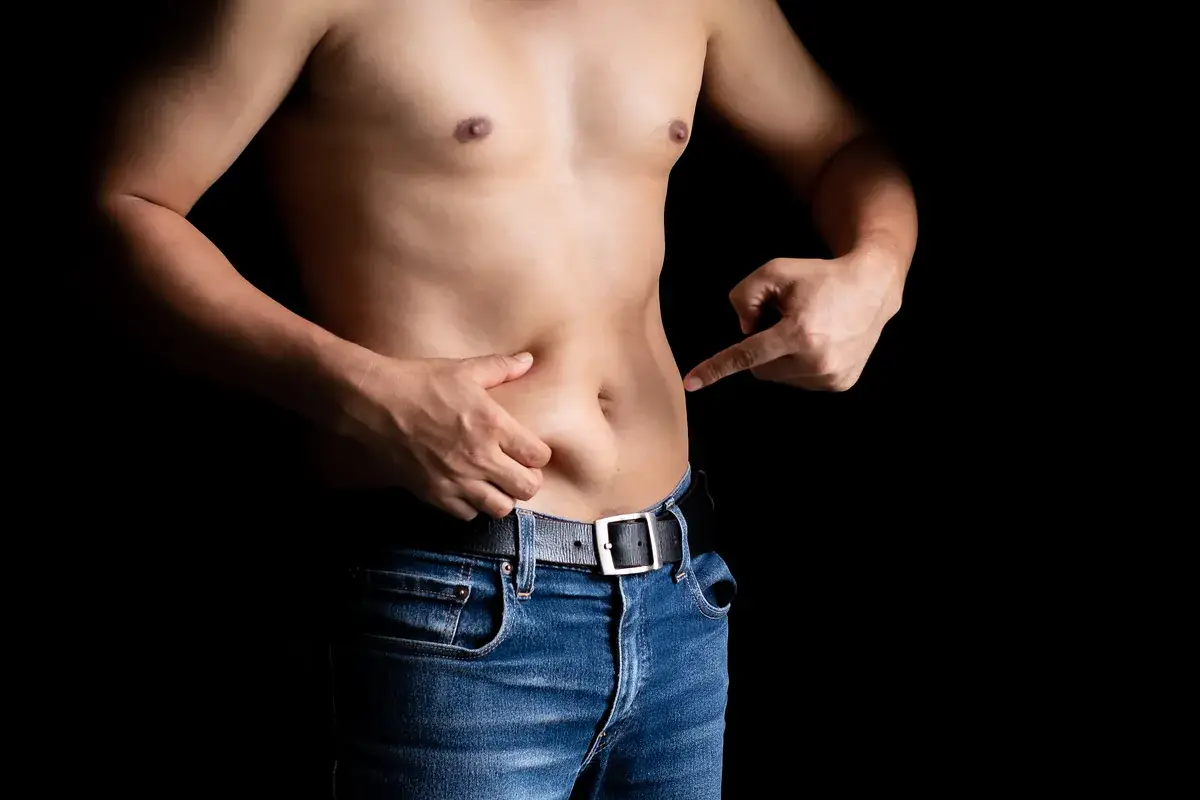
Men tend to carry flank fat higher and further back, closer to the lower ribs than the hip, and in a firmer, more fibrous deposit. That affects how much tissue an applicator can draw in, and it usually means more cycles for the same visible change. The target shape differs too: The aim on a male waist is generally a straighter line from ribs to hip rather than the inward curve most women are after.
There is one thing worth checking honestly first. Men are more likely than women to be carrying visceral fat, the deeper kind behind the abdominal wall, and that does not respond to this or any external treatment. If the waist is firm and round rather than pinchable, we will tell you at the consultation that the volume is deeper than we can reach, and what would actually help instead.
Three checks decide this, and the consultation runs them before anything else.
Take hold of the area between finger and thumb. A soft handful that lifts away from the muscle wall is subcutaneous fat and this treatment reaches it. A firm, round waist that does not yield is visceral fat sitting deeper, and no external device will touch it.
If you are actively losing, wait. Come back when things have held steady for a few months and we will see what is genuinely left, rather than treating fat that was leaving anyway.
Significant loose skin over the flanks is a different problem. Removing the fat underneath can leave the skin looser rather than tighter, so where laxity is the main issue, skin tightening or a surgical opinion is the more honest answer.
There are also medical exclusions, including cryoglobulinemia, cold agglutinin disease and paroxysmal cold hemoglobinuria, and a rare outcome called paradoxical adipose hyperplasia in which treated fat enlarges rather than shrinking. Both are screened and discussed at your consultation, and both are covered in full on our CoolSculpting® page.
| Also called | Flanks, muffin top, side fat |
|---|---|
| Best for | A pinchable pocket over the flanks, in someone at a stable weight |
| How it’s done | Controlled cooling, applicator placements mapped across each side |
| Typical plan | 2 cycles per visit as a minimum, one per side · often 4 across two visits |
| Session length | About 35 minutes per cycle |
| Typical cost (Lutz) | About $1,400–$2,800 per session · see monthly specials |
| Results appear | 8–12 weeks · continuing to about 16 weeks |
| Downtime | None · numbness and tenderness for 1–2 weeks is normal |
| Not the right treatment for | Visceral fat, loose skin, or anyone still actively losing weight |
| Performed by | Our certified CoolSculpting® team, under on-site medical supervision |
Pricing is approximate and confirmed at your complimentary consultation. Ask about current specials and flexible payment plans.
Every plan is mapped on your body while you are standing, because a deposit sits differently once you lie down:
The core of it: One cycle per side as a minimum, placements mapped so the treated area blends into untreated tissue rather than ending in a ridge.
2 cycles per visit
Where one side carries more, cycles are weighted accordingly rather than split evenly. Treating both identically preserves the difference.
Weighted placement
The two areas meet, and treating the sides alone can leave the front looking fuller by contrast. Frequently planned as one project.
Each treatment reduces a portion of the fat cells rather than all of them, so a second round about eight weeks later is normal rather than a sign something failed.
8 weeks apart
Higher, firmer deposits closer to the ribs, generally more cycles, and a straighter target line from ribs to hip.
More cycles typical
Plenty of people come in for the waist and leave having treated the area that was actually bothering them in photographs.
Not sure whether what you are holding is subcutaneous fat, visceral fat or loose skin? The consultation answers that in about a minute, and tells you honestly if this is not your treatment.
Pinch test, a check that your weight has settled, and a straight answer on whether this is the right treatment.
Marked standing up, both sides, with placements planned to overlap so the result has no visible edge.
About 35 minutes per placement. Intense cold for a few minutes, then numbness. Bring something to read.
Massage afterwards, then patience. Changes begin around week four and land at 8–12 weeks.
We’re centrally located on Cheval Blvd, an easy drive from across the area. Tap your neighborhood for directions and local details.
Cheval CoolSculpting® →
Northdale CoolSculpting® →
Odessa CoolSculpting® →
Carrollwood CoolSculpting® →
Land O’ Lakes CoolSculpting® →
Drive times are approximate. Check live directions for your exact route. Free on-site parking at 3939 Cheval Blvd, Lutz, FL 33558.
This was my first visit and it was a fantastic experience. Jenny is knowledgeable, friendly and meticulous in everything she does. I LOVE my new lips — thank you for making me look and feel more beautiful!
— C. Seyss
I’ve been going to Susan for 8 years and she and her staff are the best. She’s patient and takes her time to make perfection — I call her “Picasso.” Great prices, too.
— R. Dalom
Simply the best! I’ve been coming to this salon since 2007. From haircuts and facials to Botox, it’s nothing but the best experience and value. I always leave looking and feeling amazing.
— B. Gibson
About $1,400–$2,800 per session at Nu Image Medspa, depending on how many cycles are used. Because flanks are treated as a pair, the minimum is two cycles, one per side. Many people need four in total across two visits, so ask for the price of the full plan rather than a single session. Your figure is confirmed at your complimentary consultation, and we run new specials every month.
Two is the minimum, one per flank. Four across two visits about eight weeks apart is common, particularly on men and on larger or firmer deposits. Each treatment reduces a portion of the fat cells in the treated area rather than all of them, so staging is normal rather than a sign that the first round underperformed.
On the right love handles, yes, and the flanks are one of the better-suited areas on the body because the deposit is discrete, pinchable and sits clear of the muscle wall. What decides it is what you are holding. Soft fat that lifts away from the body responds. A firm, round waist is visceral fat sitting deeper behind the abdominal wall, and no external device reaches that.
Changes usually begin around four weeks, with the main result visible at 8–12 weeks and continuing to improve to about sixteen. Your body clears the treated fat cells gradually rather than removing them on the day, which is why this treatment has to be planned backwards from anything you have in the diary.
The treated fat cells are gone permanently, since your body does not regenerate them. The cells remaining in the area can still enlarge if your weight increases significantly, which can make the flanks look fuller again. Stable weight keeps the result, which is also why we ask you to wait if you are currently still losing.
The first five to ten minutes of each cycle are intensely cold with a strong pulling sensation from the suction, then the area goes numb and most people read or work through the rest. The massage immediately afterwards is briefly uncomfortable and it matters for the result, so it is not skipped. Numbness and tenderness across the treated area for one to two weeks afterwards is normal.
Oblique work builds the muscle underneath, it does not reduce the fat above it. Spot reduction is not something the body does. Overall fat loss does reduce the flanks, but they tend to go last, and for many people the weight at which the sides finally shift is below what is realistic to maintain. That gap is what this treatment is for.
The technique is the same, the plan is not. Men usually carry flank fat higher and further back, closer to the lower ribs, in a firmer and more fibrous deposit, which typically means more cycles for the same visible change. The target shape differs too, generally a straighter line from ribs to hip rather than an inward curve. Men are also more likely to be carrying visceral fat, which this treatment cannot reach, so the pinch test matters more.
Wait. The flanks often keep changing on their own, and treating an area that is still moving spends cycles on fat that was going to go anyway. Come back once your weight has held steady for a few months and we will assess what is genuinely left. We would rather have that conversation than take payment for a result neither of us can predict.
We’re at 3939 Cheval Blvd, Lutz, FL 33558, just off N Dale Mabry Hwy near Cheval, Steinbrenner High School and Gaither High School, serving Lutz, Carrollwood, Northdale, Cheval, Odessa and Land O’ Lakes. Open Mon 9–5, Tue–Fri 9–7 and Sat 9–3, with free on-site parking. Call 813.949.3300 to book.