

Call today! 813.949.3300
Jawline filler in Lutz, FL rebuilds definition along the mandible using a firm, structural hyaluronic acid placed against bone — sharpening the line from ear to chin and tightening the transition into the neck. It is the right treatment for a jaw that reads soft or undefined. If yours reads wide or square, the answer is the opposite one: masseter Botox®, which narrows the muscle rather than building the frame. Susan Wallace, MSN, ANP-BC — a Diamond-status Master Injector with 20+ years in aesthetics — sorts out which at Nu Image Medspa, 3939 Cheval Blvd, off N Dale Mabry Hwy near Cheval, Steinbrenner High and Gaither High.
Most jawlines take 2–4 syringes, and the change is visible immediately. A typical treatment runs $1,200–$2,400 depending on how much is used. Filler here lasts 12–18 months, longer than most facial areas, because firm products placed against bone break down slowly. There is no downtime, though swelling and occasional bruising settle over about a week. Serving Lutz, Cheval, Carrollwood, Northdale, Odessa and Land O’ Lakes. Open Mon 9–5, Tue–Fri 9–7 and Sat 9–3. Call 813.949.3300.
These get treated as one request and they are not. A large share of people who arrive asking about jawline filler actually want the opposite treatment, and the two are not interchangeable — adding filler to a jaw that is already wide makes the lower face heavier, not sharper.
Put your fingers on the back corner of your jaw, just below and in front of your ears. Clench your teeth. If a firm ball of muscle bulges under your fingers and that is where the width comes from, the width is muscle. If nothing much moves and the shape you dislike is a soft, blurred line rather than a broad one, the issue is structure.
Structure → filler. A soft or undefined jaw is missing a defined edge along the bone. Firm filler placed on the mandible rebuilds that edge, sharpens the line from ear to chin and cleans up the transition into the neck.
Muscle → masseter Botox®. A wide, square jaw is usually an enlarged masseter, often from years of clenching or grinding. Relaxing that muscle lets it slim over several weeks, narrowing the lower face. It generally eases jaw tension and headaches along the way.
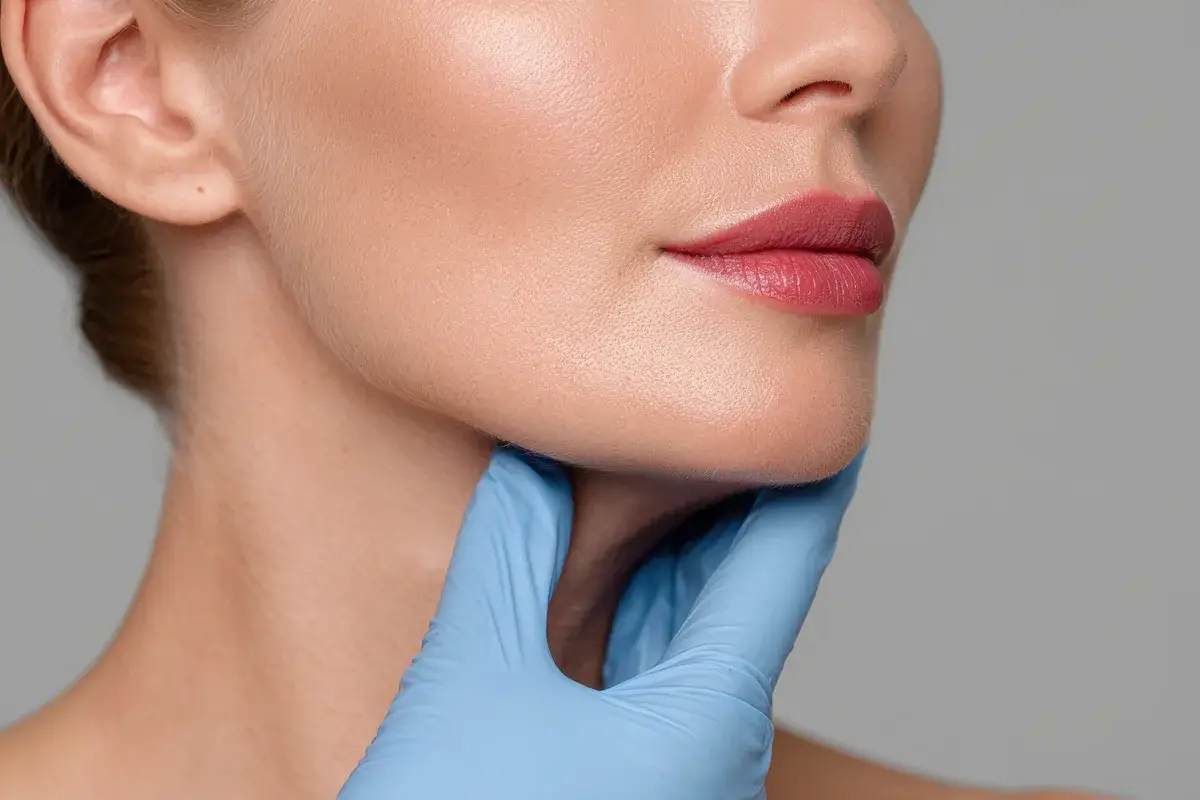
Plenty of people are a mix, and the order matters. Narrow the muscle first, wait for it to settle, then decide how much definition the underlying frame still needs. Building the frame first means paying for filler you may not want once the width comes down.
One builds a frame that is missing. The other narrows a muscle that is too big. Getting this wrong is the most common and most expensive mistake in jaw contouring — and it is the first thing we settle at your consultation.
| Jawline filler | Masseter Botox® | |
|---|---|---|
| Fixes | A soft, undefined jaw | A wide, square jaw |
| How | Adds structure on bone | Slims the muscle |
| Shows | Immediately | Over 4–6 weeks |
| Lasts | 12–18 months | 3–4 months |
| Also helps | Neck transition | Clenching, TMJ |
| Both? | Yes — slim the muscle first, then define | |
In most of the country the jaw and the neck below it disappear for a third of the year. Collars go up, scarves come out, turtlenecks do quiet work from November through March. People stop thinking about that part of their face because they cannot see it.
There is no version of that here. Hair goes up in May and stays up, collars stay open, and the jawline and neck are on display every day of the year. It is the one part of the face you cannot dress around in this climate, which is why it tends to be the thing people notice about themselves in August rather than in a mirror in January.
The other half of it is how photographs actually happen around here. A phone held at chest height on a boat, at a table on a patio, on the dock at the end of the afternoon — that is a camera below eye level, and a low camera is the single angle that punishes a soft jawline hardest. It shortens the line from ear to chin and blurs the border into the neck. The same face photographed from slightly above looks entirely different, which is why people so often describe the problem as something they only see in pictures.
It sets the goal. The aim is not a jaw that looks sharp head-on in good light — almost any jaw does. It is a border that holds up in profile and from below, in the ordinary conditions where you are actually photographed. That is a structural target, and it is why the product choice matters more here than almost anywhere else on the face.
Hyaluronic acid fillers are not one product with one behaviour. They differ enormously in how strongly they resist being squashed — a property injectors call G-prime. A high G-prime filler behaves like a firm structural gel: Placed against bone, it holds a projected edge and keeps its shape. A low G-prime filler behaves like a soft cushion, which is exactly what you want in a lip and exactly what you do not want on a mandible.
A jaw is not a still surface. It chews, it talks, and it spends a third of your life pressed into a pillow. Put a soft, water-loving filler onto that and it gradually spreads away from where it was placed. The result is not a sharper jaw, it is a fuller lower face — a heaviness along the jaw and under it, sometimes a puffiness that arrives months after the appointment. That is what most people are describing when they say filler migrated.
True migration — product physically travelling to a place it was never put — is less common than the internet suggests. Far more often the product was simply too soft for the job, placed too superficially, or too much was used in one session. All three are choices made by the person holding the syringe.
Structural jaw work calls for the firmest products in the range. Juvederm® Volux™ was developed specifically for the jaw and chin, and Restylane® Lyft™ is the other common structural choice. Softer products from the same families — the ones used in lips and fine lines — are the wrong tool here regardless of how good they are elsewhere. You can see the wider range on our dermal fillers page, along with Juvederm® and Restylane® in detail.
The jawline is not a line along the side of the face. It is a continuous border that starts at one ear, runs forward, turns at the chin and runs back to the other ear. The chin is the front anchor of that shape, and the whole thing is only as defined as its weakest point.
When the chin sits back — short in profile, or set behind the lower lip — adding volume only to the sides produces something wide rather than sharp. The line has nothing to run toward. From the front the face can even look broader than before, which is not what anyone was paying for.
So a proper assessment looks at the profile before it looks at the sides. If the chin needs projection, that usually comes first or in the same session, because it changes how much definition the sides actually need. It is also why so many people search for chin and jaw filler together — the two are one structure, and treating them as separate purchases produces worse results.

Chin work uses the same firm, structural products, and it is covered under dermal fillers. Where a recessed chin is contributing to fullness under the jaw rather than in front of it, Kybella® or CoolSculpting® may be the more direct answer to that part of the picture.
Jaw work is the treatment men most often come in for first, and frequently the only one they are interested in. It is structural rather than cosmetic in feel, the result is specific, and nothing about it reads as having had work done.
The technique is the same. The target is not. A masculine jaw wants width at the back corner and a squarer angle where the vertical of the jaw meets the horizontal — strength and breadth. A feminine jaw wants a cleaner, narrower line and a tighter transition into the neck — definition without added width. Treating a man’s jaw with a feminine blueprint produces something that looks tidy and slightly wrong, and the reverse is worse.
Practically, male jaws usually need more product. The bone is larger, the soft tissue is thicker, and the effect has to carry across a bigger surface to register at all. Underdosing a male jaw is a common way to spend money and see very little, which is why an honest estimate up front matters more here than almost anywhere.
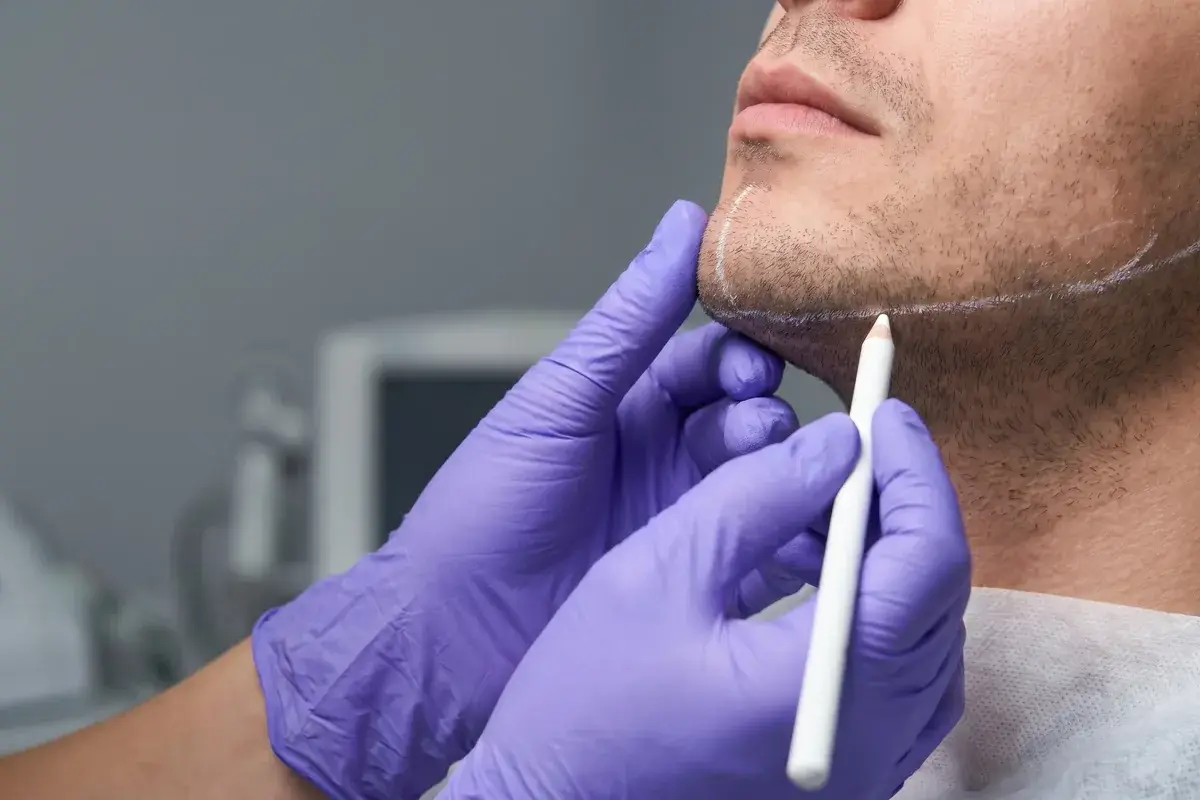
Jowls and a soft jawline look related and are not the same thing. A jowl is tissue that has descended past the jaw border — laxity, gravity and time. A soft jawline is a border that was never especially defined. One is a problem of skin and support, the other of structure.
That difference decides whether filler helps. Filler is very good at rebuilding a border. It is not good at lifting tissue that has already fallen, and adding volume to a face with significant laxity can make the lower third heavier — which is precisely the opposite of the goal.
Where filler does help is the dip immediately in front of a jowl, called the pre-jowl sulcus. Filling that hollow restores a continuous line along the jaw and makes the jowl far less obvious without adding weight. It is a targeted fix rather than a wholesale one.
For real laxity, honest options are skin tightening, energy-based treatments such as Fraxel® for surface quality, or a surgical consultation when the descent is well past what a non-surgical treatment can address. Being told that plainly is more useful than being sold four syringes.
| Best for | A soft or undefined jawline, a blurred transition into the neck, an unbalanced profile |
|---|---|
| How it’s done | Firm structural HA filler placed against the mandible, by needle and cannula |
| Typical amount | 2–4 syringes, depending on the starting shape and the target |
| Typical cost (Lutz) | About $1,200–$2,400 · priced per syringe · see monthly specials |
| Results appear | Immediately · fully settled at about 2 weeks |
| Results last | 12–18 months — longer than most facial areas |
| Downtime | None · swelling and possible bruising for about a week |
| Not the right treatment for | A wide jaw from muscle bulk (see masseter Botox®) or jowls from laxity |
| Performed by | Susan Wallace, MSN, ANP-BC · Diamond-status Master Injector · 20+ years |
Pricing is approximate and confirmed at your complimentary consultation. Ask about current specials and flexible payment plans.
Every plan starts from your profile, not a template. Common approaches include:
The core of the treatment: A firm gel placed on the bone from the back corner forward, rebuilding the edge and cleaning up the border into the neck.
2–4 syringes
Squaring the back corner where the vertical of the jaw meets the horizontal. This is what reads as strength, and it is the difference between defined and merely thinner.
Back corner focus
When the front anchor sits short, the chin comes first — otherwise the sides have nothing to run toward and the face reads wider.
Filling the small hollow just in front of a jowl restores a continuous jaw line and makes the jowl far less noticeable without adding weight.
Targeted, small volume
For a jaw that is both wide and undefined: Relax the masseter, let it settle for six weeks, then decide how much structure the frame still needs.
Width at the back corner, a squarer angle and generally more product — a different target shape rather than a different technique.
Wider, squarer, more volume
Not sure whether your jaw needs structure, narrowing, or both in sequence? A consultation settles it, with your syringe count and price confirmed up front.
Most injectable risk is about where the product goes. On a jaw, a large share of it is about which product and how much — a judgment made before the syringe is opened. Choosing a soft filler for a structural job is not a technique error you can see on the day. It shows up three months later as a heavier lower face, and by then it is a long wait or a dissolving appointment.
There is a placement question too, and a serious one. The facial artery crosses the lower border of the jaw at a predictable point near where the masseter meets the bone. Jawline work runs directly through that territory, which is why plane, technique and knowing exactly where that vessel sits are not optional details.
Twenty-plus years of that decision, made across thousands of faces and reviewed at follow-up, is what Diamond status actually measures. The more useful part is what it lets Susan say out loud: That your jaw is wide rather than soft. That the jowl bothering you will not improve with volume. That two syringes will do what you want and the fourth would only make your face heavier. On this part of the face, the answer is no more often than anywhere else we treat.
Profile first, then front. We check the chin, the masseter and the border, and agree the target shape and price.
The jaw is marked out against the bone so placement follows your anatomy rather than a template.
Numbing first, then needle and cannula depending on the zone. Around 30–45 minutes.
The change is visible immediately. Swelling eases over about a week, with a review at two weeks.
We’re centrally located on Cheval Blvd, an easy drive from across the area. Tap your neighborhood for directions and local details.
Cheval Jaw Contouring →
Northdale Jaw Contouring →
Odessa Jaw Contouring →
Carrollwood Jaw Contouring →
Land O’ Lakes Jaw Contouring →
Drive times are approximate — check live directions for your exact route. Free on-site parking at 3939 Cheval Blvd, Lutz, FL 33558.
This was my first visit and it was a fantastic experience. Jenny is knowledgeable, friendly and meticulous in everything she does. I LOVE my new lips — thank you for making me look and feel more beautiful!
— C. Seyss
I’ve been going to Susan for 8 years and she and her staff are the best. She’s patient and takes her time to make perfection — I call her “Picasso.” Great prices, too.
— R. Dalom
Simply the best! I’ve been coming to this salon since 2007. From haircuts and facials to Botox, it’s nothing but the best experience and value. I always leave looking and feeling amazing.
— B. Gibson
Jawline filler at Nu Image Medspa typically runs about $1,200–$2,400, priced per syringe rather than per area. Most jawlines take 2–4 syringes, so the figure depends mainly on your starting shape and the definition you want. Your exact plan and price are confirmed at your complimentary consultation before anything is injected, and we run new specials every month.
Most jawlines take 2–4 syringes. What moves the number is how much definition is missing to begin with, whether the back corner is being squared as well as the border defined, whether the chin is being treated in the same session, and the size of the jaw — larger male jaws generally need more product to register at all.
Usually 12–18 months, which is longer than most facial areas. Firm structural fillers are cross-linked to resist breaking down, and placement against bone in a relatively low-movement area slows that further. Many people top up rather than fully replace, since some product is still present at the point results begin to soften. To compare the jaw with other areas, see how long dermal filler lasts in each part of the face.
A firm, high G-prime product designed to hold its shape against bone. Juvederm® Volux™ was developed specifically for the jaw and chin, and Restylane® Lyft™ is the other common structural choice. Softer fillers from the same families — the ones used for lips and fine lines — are excellent products in the wrong place here. Firmness is the deciding factor, not brand.
True migration, where product physically travels somewhere it was never placed, is less common than the internet suggests. What people usually mean is spreading — a filler that was too soft for a working jaw, placed too superficially, or too much used in one session, gradually flattening out and leaving the lower face heavier rather than sharper. All three are avoidable, and all three are decisions made before the syringe is opened.
It depends on whether your jaw is soft or wide. Clench your teeth with your fingers on the back corner of the jaw: If a firm ball of muscle bulges out and that is where the width comes from, you want masseter Botox® to slim it. If nothing much moves and the issue is a blurred, undefined border, you want filler to build structure. If both apply, slim the muscle first and reassess in about six weeks.
Often not directly. A jowl is descended tissue rather than lost volume, and adding filler to a face with real laxity can make the lower third heavier. What does help is filling the small hollow just in front of the jowl, the pre-jowl sulcus, which restores a continuous jaw line and makes the jowl much less obvious. For genuine laxity, skin tightening or a surgical opinion is the more honest answer.
Yes, and it is the treatment men most often start with. The technique is the same but the target shape is not: A masculine jaw wants width at the back corner and a squarer angle, while a feminine jaw wants a cleaner line and a tighter transition into the neck. Male jaws also generally need more product, because the bone is larger and the soft tissue thicker.
Numbing cream goes on first and the fillers used contain lidocaine, so most people describe pressure rather than pain. A cannula is used where the anatomy calls for it, which reduces bruising. Expect some swelling for about a week and occasional bruising along the jaw. There is no downtime, though it is worth avoiding a big event in the first ten days.
We’re at 3939 Cheval Blvd, Lutz, FL 33558, just off N Dale Mabry Hwy near Cheval, Steinbrenner High School and Gaither High School — serving Lutz, Carrollwood, Northdale, Cheval, Odessa and Land O’ Lakes. Open Mon 9–5, Tue–Fri 9–7 and Sat 9–3, with free on-site parking. Call 813.949.3300 to book.